

Artificial or Aviation Intelligence? Pick your Ai
“Good Morning and Welcome Aboard! This is your artificial intelligence first officer speaking, Orac 6. I’ll be your pilot flying today on our journey from Boston to Los Angeles.It’s an absolutely beautiful day in Los Angeles, and I’ll be sure to get you there safely along with your human Captain, Robert Williams“
Seems a bit eerie doesn’t it? You mean to tell me these are the two guys up front?

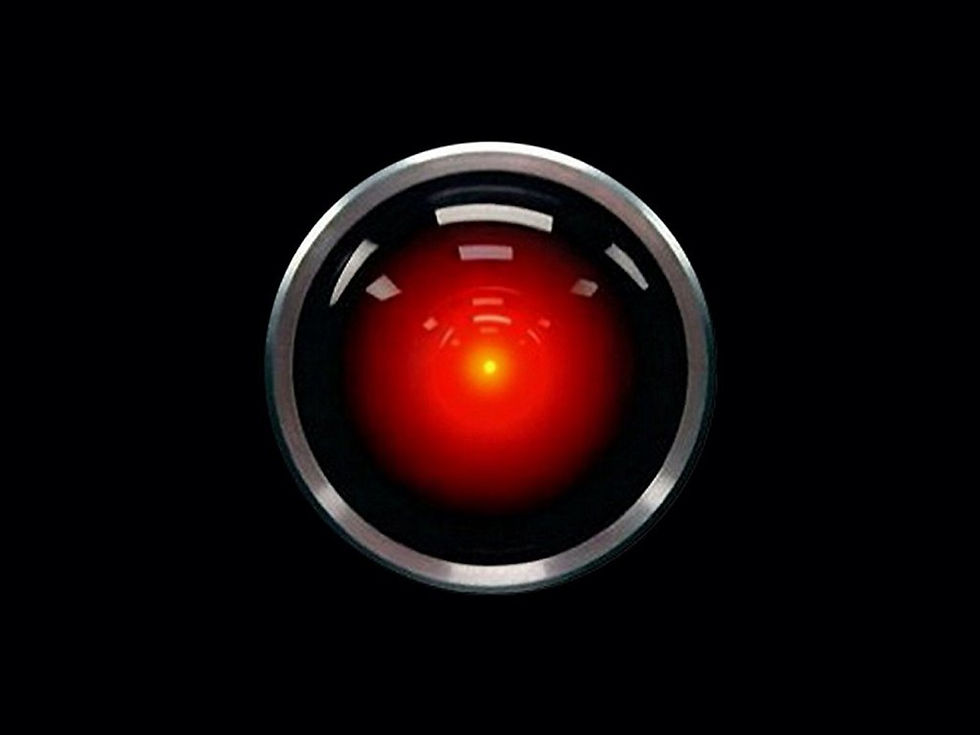
Or for the few baby boomers who read these posts, maybe this ominous sight is more familiar.
Disney obviously thought they were being clever when they designed “AUTO” for Wall-E.
Whichever science-fiction ulterior-motivated artificial intelligence you prefer, I perceive the sentiment remains the same:
The world isn’t quite ready for artificial intelligence pilots.
And yet, artificial intelligence pilots might be about ready for the world.
On December 20th, 2025, a Beechcraft KingAir 200 successfully made the first ever general aviation landing using autoland.
If you’re unfamiliar with “autoland”, it’s exactly what it sounds like: With the press of a button, the Garmin Emergency Autoland (EA) system is capable of taking total control of an aircraft in order to execute a safe and prompt emergency landing in the event a pilot is not capable of doing so. Not only can the system get everyone down safely, but the Garmin product is also capable of making decisions based on weather and fuel. Plus, EA makes radio calls and updates passengers on what’s going on.
In the case of this particular event from December 20th, the EA system was activated automatically following rapid cabin-depressurization. The pilots donned their supplementary oxygen masks, but elected to leave EA engaged and monitored its performance through the remainder of the flight. No passengers were on board; the aircraft landed without issue.
We might not be comfortable with the idea of a computer flying the airplane as a substitute for human pilots-
But we might find comfort in knowing the airplane could do it if it had to.
So, is Emergency Autoland really artificial intelligence?
Sort of.
Without getting into the weeds of artificial intelligence (and trust me, they’re tall), I’ll offer you a one-minute lesson:
In the scientific pursuit of what “Artificial Intelligence” might one day become, we have only arrived at the existence of what is called “Narrow Ai“. Anything more advanced than this is purely theoretical (for now).
Narrow Ai can only perform the task that it has been assigned and it will accomplish that task in one of three ways:
Deterministic Ai
Probabilistic Ai
Generative Ai
Deterministic Ai will always generate the exact same outcome for a given set of inputs based on the rules that are set. This form of Ai does not take any liberties; some might argue that it is not even a form of artificial intelligence.
Probabilistic Ai will provide answers and make predictions based on incomplete information. This form of Ai relies on patterns and probabilities to make predictions and then self-corrects over time.
Generative Ai compiles a collection of things that already exist, studies their commonalities, and then produces an entirely “new” thing. This form of Ai can also be useful when a data set is so large and varied that it becomes difficult to manually assess where correlation might exist.
As you may have guessed, Garmin’s EA technology uses “deterministic” programming to land the aircraft safely. There is no randomness involved; given the overall conditions of the flight in question when the system is activated (weather, fuel, airports available, etc.), it will make the exact same decision on what to do every time.
This consistent behavior was an essential aspect of getting the certification approved by the FAA. The concept of “performance, system reliability, repeatability” has been a requirement since the earliest forms of auto-land technology were introduced to large commercial aircraft many decades ago. However, the capacity to make aeronautical decisions, make radio calls, and inform worried passengers of what’s going on goes well beyond what you might find in any FAA bulletin regarding automated flight.

But does that mean we’ve reached the mountain-top of artificial intelligence in aviation?
Absolutely not. In fact, I’d argue we may only be seeing the tip of the iceberg.
Now, I’m not saying it’s time to hand over the controls to our technologically superior overlords.
But there’s some chance they might have something to offer us.
Especially in an emergency.
Training for emergencies is one of the most important and intensive aspects of the flying experience for any pilot. Even when you’re in a training environment, the situation can quickly become overwhelming if a pilot is too slow to assess and react. Conversely, a rushed wrong decision has the tendency to make things far worse.
One of the most invaluable skills a pilot can have in any emergency situation is to compose themselves long enough to think about what is going on. There are many aircraft-related emergencies that require prompt attention; very few require instantaneous action. Taking a second or a single deep breath to confirm your next move can be the difference between a well-managed emergency and an irrecoverable error.
It’s easier said than done.
But maybe Ai can do it a little better than a human can?
After all, computers-
Have the ability to rapidly interpret new information
Have databases filled with potential emergencies and their corresponding corrective actions.
Aren’t going to feel the stress of ensuring their own survival (yet)
This is where probabilistic and generative artificial intelligence may hold a bright future in aviation. These are the forms of Ai that might be able to step into an emergency situation and say-
I believe this is happening: If you agree, we should do this-
This might also be happening: If you agree, we should do this-
I think this is less likely, but this is a potential cause of problem too. If it’s not the first two options, let’s try this-
Having an emotionless, data-driven copilot onboard the aircraft would be an incredibly beneficial safety tool for responding to such a scenario. An indefinitely steady hand when things get shaky.
And yet, almost paradoxically, the level-headedness that artificial intelligence could provide might be the most damning reason for why it can't do the job alone.
Because what happens when things just don't make sense?
In July of 1989, Captain Al Haynes heroically saved 184 of the 296 souls on board when his DC-10 suffered a near total control failure after the aircraft's hydraulic lines had been severed. The aircraft’s manufacturer had claimed, “a complete hydraulic failure was impossible”.
On Christmas Day 2024, Azerbaijan Airlines Flight 8243 was dealing with a very similar hydraulic line issue after being hit by a Russian missile. Captain Igor Kshnyakin and First Officer Aleksandr Kalyaninov managed to get the airplane back on earth in a manner that saved the lives of 28 of the 67 people on board.
And there's Captain Sullenberger: The man who decided to land US Airways Flight 1549 in the Hudson River after both engines experienced bird strikes and subsequent failures. Appropriately named the "Miracle on the Hudson", all 155 passengers and crew walked (or swam) away.
There was no procedure in the manual for any of the situations described above. There was no checklist to pull out that was going to solve the problem.
A computer can't comprehend when the impossible happens (and yet, it does).
It is in those moments where human Aviation Intelligence remains superior.
I think we all remain many years away from “Orac 6” flying you to your destination.
But in many ways, he could do it if you needed him too. And I believe the sooner we can get him into the cockpit to at least help out, the better.


Comments